Q&A with poet David Judge
September 24, 2025
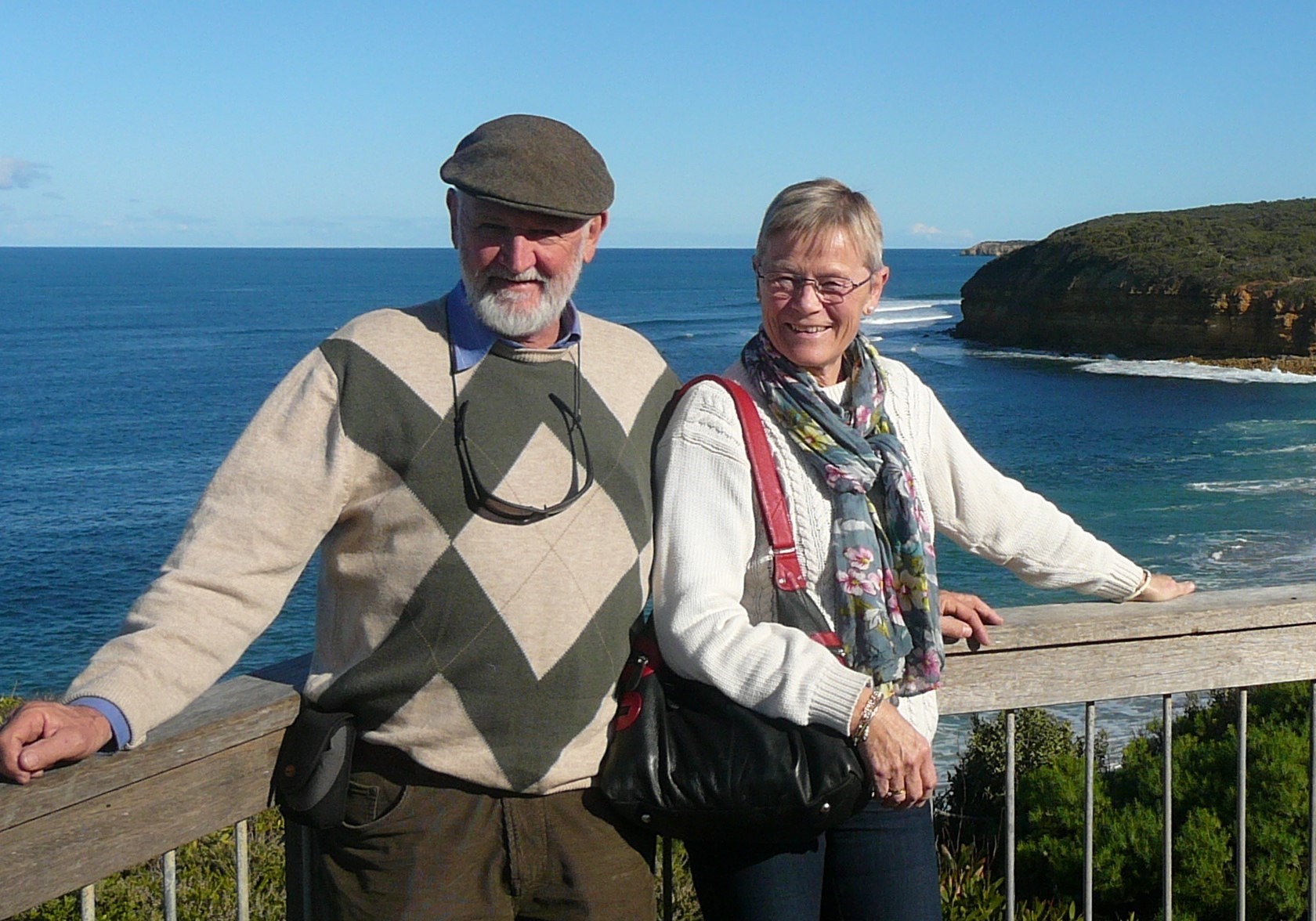
David (pitcured with his wife Elisabeth) was there throughout his friend Graham's MND journey. The experience inspired him to write a poem and donate a portion of sales from his book to MND Victoria.
We asked David a few questions, so that we could better understand Graham's journey and David's motivation.
He also, kindly, gave us permission to reprint the poem, The Other Side, below.
Thank you for agreeing to answer some questions! To start with, can you tell us about your dear friend Graham?
Graham and I were students at Hawkesbury Agricultural College in the late 60s. We had both finished High School to pursue a career in agriculture and the College we attended as boarders was a 2000 acre fully operational educational farm which provided hands-on experience for students in a range of farming enterprises.
We played in the college rugby team, worked together on various farm projects, became friends with each other’s families and continued that friendship for over 50 years.
There are so many memories but few eclipsed his purchase of a ‘hot’ FJ Holden whilst at College and the hilarious weekends we spent in Sydney with his father Frank and his two younger brothers Peter and Paul who were still at school. We lost contact for a few years after college for various reasons but resurrected our mateship before his fateful diagnosis.
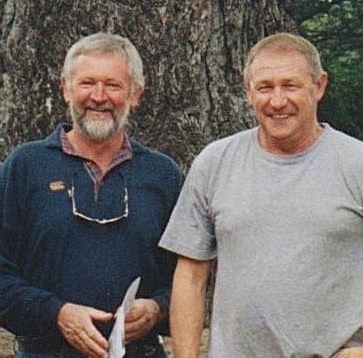
What was Graham's MND journey like?
Whilst I can never fully appreciate Graham’s battle with MND, it became the focus of our relationship in later life and a binding force amongst those who knew him as a mate.
Graham had always been an energetic, fun-loving, robust and competitive character who endeared himself to all who knew him. To see his gradual loss of mobility and therefore his capacity to do the things he enjoyed was hard to accept. When he was diagnosed with MND, I wasn’t fully aware of what that meant until the symptoms became obvious and gradually worsened. Eventually, Graham became paralysed from the neck down, losing all forms of independence except his speech. We lived a long way from each other so we spoke regularly on the phone.
He was always positive despite his deteriorating condition and our conversations covered many topics including our college days, politics, sport, international affairs and endearingly about our respective families. Our children and their achievements in business, sport and professional development were always discussed with pride and as his independence evaporated, he spoke of the deep connection he had with his amazing wife Helen who cared for him in ways that most people could never comprehend.
Strangely, our friendship became more meaningful as the years passed, as it seemed to do for his multitude of friends. It was certainly the case for his mates who attended HAC and our reunions were always special occasions.
Graham inspired your poem, 'The Other Side'. What was your process for writing this poem?
Most of the poems I write take weeks, sometimes months to mature into something I am satisfied with at various levels including being technically correct, emotive, stimulating, inspirational, humorous, heartfelt or just simply entertaining. I wrote ‘The Other Side’ within a few hours of hearing that Graham had finally succumbed to MND.
I wrote it with mixed feelings of grief but also of relief. I also wrote the poem to acknowledge Graham’s inspirational impact on the lives of so many people from all walks of life who knew him as a family man of immense integrity, intellect and endearing humour.
You're an award-winning Australian poet. Why did you start writing poems?
I started writing poems as a means of artistic expression after Elisabeth and I sold our family farm in 2016. The first poem I wrote was titled ‘The Interview’ which described a conversation between a young HAC graduate and a farmer from western NSW who was looking to employ a jackeroo. Writing traditional Australian poetry gradually developed into something more than an occasional verse as I rediscovered the life and times of our literary masters, ‘Banjo’ Paterson, Henry Lawson and many others.
I also discovered a thriving national community of like-minded bards who were writing and performing at numerous literary festivals across the country. Their dedication and poetic artistry were infectious, and the more I learned from them the more I improved. I became determined to improve my writing, not only technically but also to write about contemporary issues such as the erosion of our cultural heritage, social inequality, and environmental degradation.
With an eventful, fulfilling and at times turbulent 70+ years behind me, I have accumulated a vast and diverse range of knowledge, skills and experiences to call upon for poetic expression. I’m not sure what prompted me to start writing poetry so late in life, however, it has given me an enduring sense of place and purpose and a fulfilling outlet for artistic creativity.
Australian rhyming verse has a rich and vibrant historical affinity with our national identity and seemed to be the most natural way for me to connect with the past in a way that is structured, logical and easy for most people to understand. When it was suggested that I give my poems a public airing, I decided to enter a few poems in various Australian ‘Bush Poetry’ competitions. Being presented with my first award in 2018 provided the impetus to continue writing.
Why did you decide to write your poetic memoir, 'A Sense of Place'?
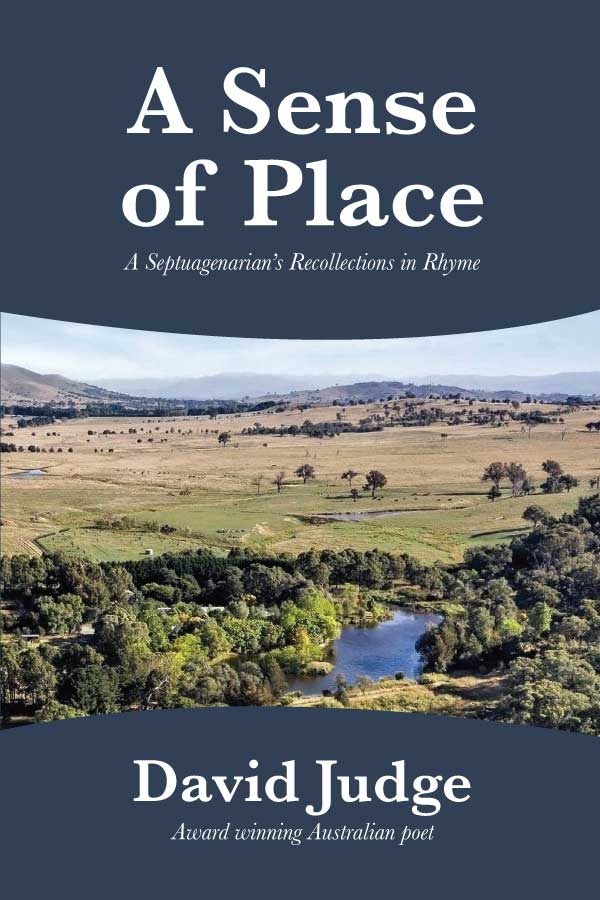
With increasing successes in nationally coveted written poetry competitions I decided to collate my poems for a family archive booklet as a poetic memoir. Most of my poems relate to growing up in rural Australia, my work, travelling to many remote and challenging locations and my fascinating family history in Australia as far back as the First Fleet ( bottom deck!!).
I submitted the manuscript to a publisher which unfortunately went into receivership shortly after I signed a contract to share the costs of production. Given the generous encouragement I received, I decided to publish the book myself.
Years beforehand, I had been encouraged by Graham to have my poems published. I commented that if I was to succeed, part of the book sales would be donated to help people dealing with the symptoms of MND.
Why did you decide to donate some of your book sales to MND Victoria?
Having seen the devastating effect that MND has on those who suffer from its debilitating symptoms as well as on their families/carers, (and that there was no cure), I decided that it was a worthy cause to which I could make a meagre contribution in Graham’s memory.
My decision to donate was not as a marketing tool although I am often conflicted with the notion that I need to sell more books so that I can continue to donate. On the other hand I do not want to be seen as using the donation as a means to selling more books. Maybe someone has some ideas on how to best reconcile with that dilemma
Do you have any advice/thoughts you'd give to someone else with a friend who has been diagnosed with MND?
Graham often said that the ongoing contact with his mates, either in person or on the phone, was a source of great comfort and enjoyment, particularly in the latter stages of the disease.
My understanding is that people with MND experience a wide range of symptoms over varying stages and it was important for me to have a broad understanding of the disease and the way that it effects individuals.
Graham was always open to discussing MND, although he was also keen to talk about anything else.
The Other Side
It's something we all think about, to take that one last ride,
to leave this world and all our mates to see the other side.
It happened to a friend of ours, a bloke that we all know,
who rang his mates the day before to say, I gotta go!
No one's ever been there and decided to come back,
complaining of conditions or the services they lack.
It's sure to be a wondrous place with all the joy he'll bring,
while playing for the rugby team for Heaven on the wing.
For years we saw that mate of ours confront the MND
and knowing of its evil ways and how the end would be.
We tried to understand and felt there's nothing we can do,
but he was more concerned about the health of me and you.
In recent times of chats we had, he'd talk about the past,
recalling all those things he did that left us all aghast.
From mining jobs to banking, from the trucks to swimming pools,
our mate was never one of those to follow all the rules.
But like so many of us who had times we could forget,
we are the better for it due to someone we have met.
And so it is with Helen who has been our old mate's rock,
who cared for him for all those years, all hours on the clock.
So let us all remember that our time on Earth is short,
to make the most of what we have, just like our good mate thought.
And when we get to finish here and take that final ride,
the venue for reunions will be on the other side.
Share page