Treat Age Equally
The unfair disparity in government-funded support between people with MND under the age of 65 with NDIS and those over 65 with My Aged Care.
There are currently 524 people in Victoria who are diagnosed with motor neurone disease (MND).
MND doesn’t discriminate, and neither does MND Victoria. Anyone, at any time, can develop MND.
Over the last 43 years we’ve provided care and support to people as young as 9 and as old as 98. We support people who become trapped by their body heart-wrenchingly quickly, as well as those who progressively lose their ability to move and communicate over years.
Donate
Every contribution makes a difference. Thank you for supporting our cause.
Secure Payment
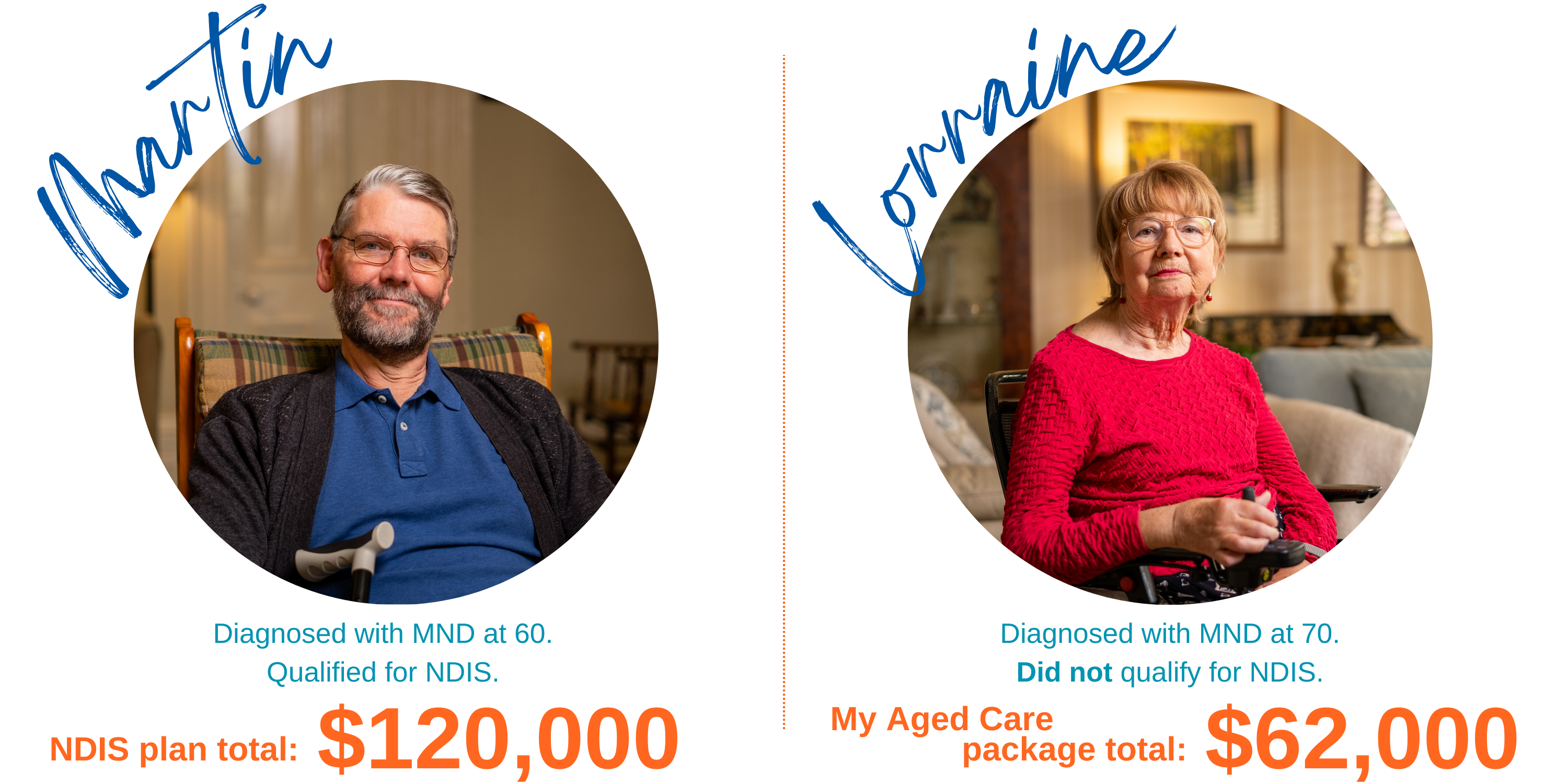
Martin and Lorraine live less than 15 minutes away from each other in Bendigo.
After experiencing weakness in their muscles, and noticing their arms and legs failing to move as they should, they were diagnosed with MND.
Diagnosed just 13 months apart, they were both told that this disease will progressively take their movement, their speech, and their life.
Despite all of their similarities, the Australian government treats them differently because of an arbitrary age cut-off.
Martin was diagnosed at 60, which means he’s been placed on the NDIS with a plan that is reactive to his changing needs.
Lorraine was diagnosed at 70. Because she was over 65, she’s been placed on a My Aged Care plan, which doesn’t come close to covering the level of care and support she currently requires.
When it comes to care, should age really count?
53% of the people we’re currently supporting aren’t eligible for the NDIS solely because they were diagnosed over the age of 65.
The average NDIS package for a person living with MND is $300,000, while the highest possible My Aged Care package is only $62,000. Those over 65 can face waiting times up to 15 months, just to be assessed for a package. In the meantime, their disease is progressing, and MND Victoria is there to provide support.

How you help us treat everyone, at any age, equally.
Only 16% of our funding comes through government grants. This means we’re only able to support Martin, Lorraine, and everyone else with MND through this awful disease because you support us.
We’ve supported, and will continue to support, every Victorian living with MND equally, such as through our vital assistive equipment warehouse, and our counselling service—both of which would not be possible without the generous support of people like yourself.
Lorraine's Story
Lorraine was diagnosed with MND at the age of 70, meaning she is not eligible for the NDIS.
Due to her age, the government only allows Lorraine to be put on a My Aged Care plan, which limits her supports significantly when compared to someone on an NDIS plan.
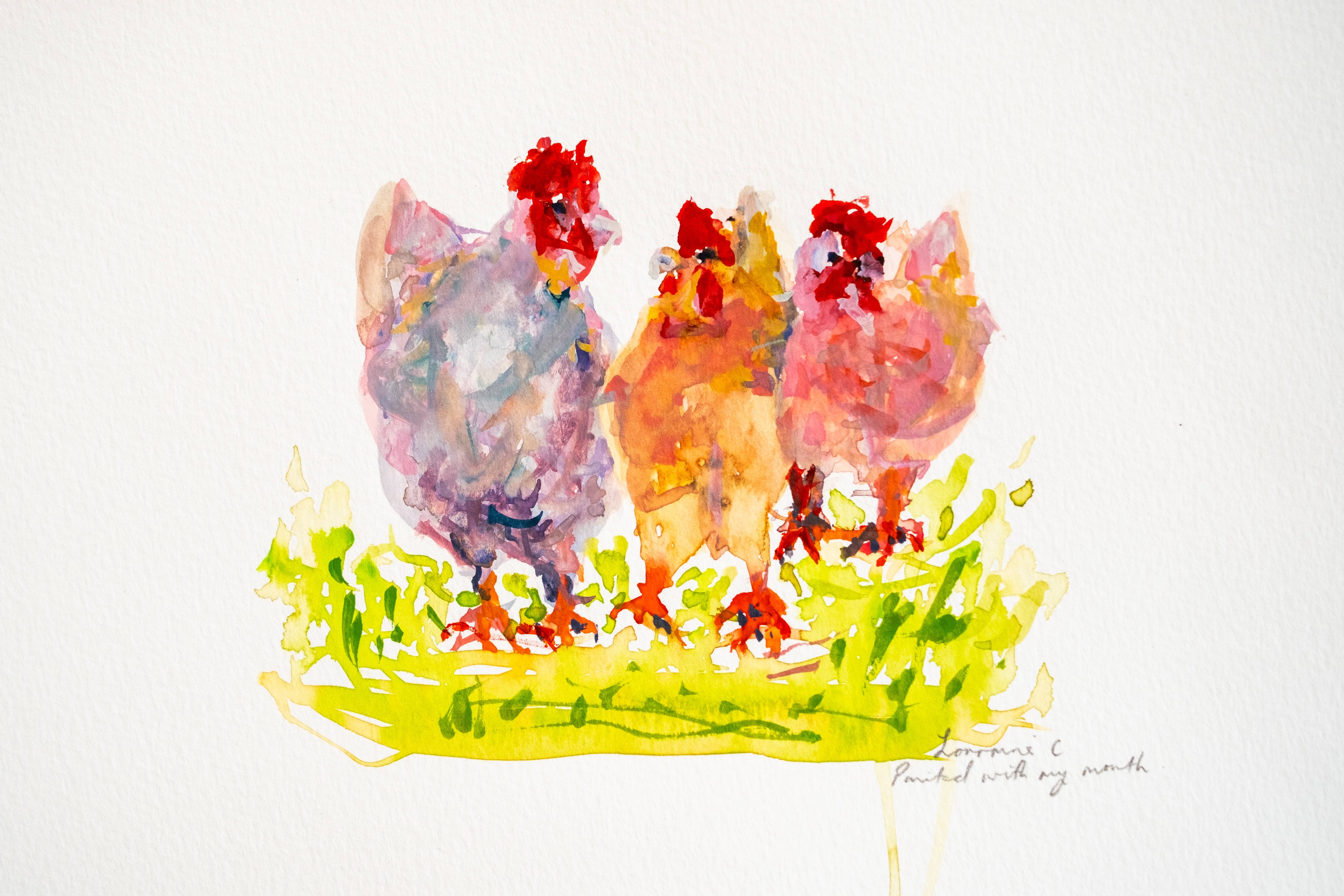
Right now, Lorraine’s lost use of her arms, hands, and legs. She paints with her paintbrush in her mouth. She turns light switches on with her chin. She turns her wheelchair on with her nose.
And, while she has it, she’s determined to use her voice.
Would you treat 65 differently?
Please help us continue to treat all Victorians living with MND equally by donating today.
Lorraine's watercolour paintings...
Painted using her mouth in Bendigo, Victoria.



What we achieved last year
Supported
859
people living with MND

Delivered
27,047
hours of service

Provided
6,577
items of equipment

Supported
432
carers through wellness programs