An Intimate Stranger - Graeme's fundraising album
February 05, 2026
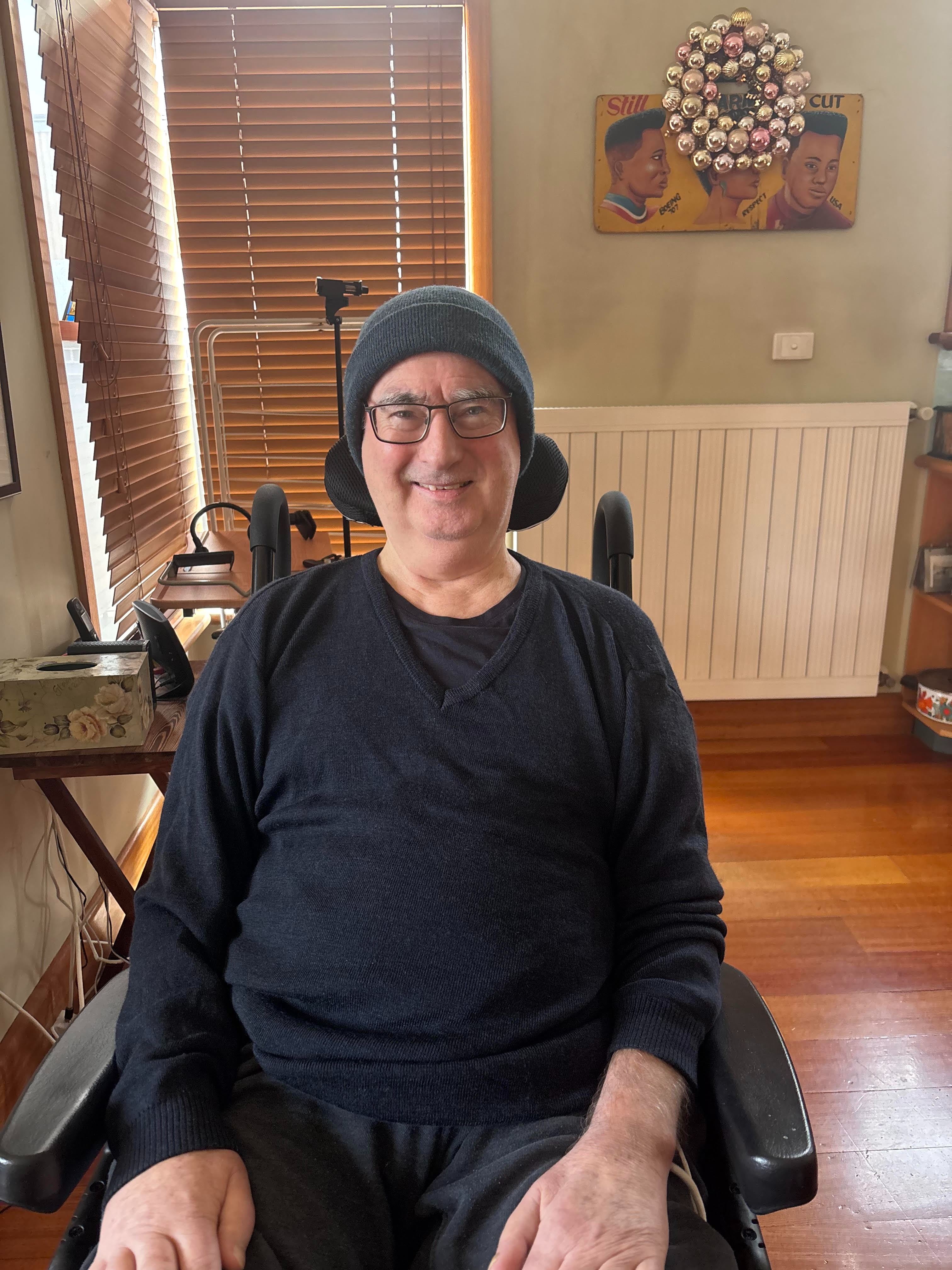
My name is Graeme Scott. I have lived a long and privileged life, rich in cultural, artistic, political, social, and philosophical experiences.
After five decades working as a classroom teacher and principal class administrator, I retired in 2019. A mere three years into my retirement, my life balance was shattered by a diagnosis of motor neurone disease (MND) in October 2022.
I have now been living with MND for over three years.
While MND has robbed me of my physical capabilities, it has also presented an unexpected opportunity to create.
MND
I was diagnosed when I was 69, but probably had it two or three years prior to that and didn’t know it. It started with my shoulder — I was very fit, fitter than all of my friends, and actively biking, cross-training, playing community cricket and walking, but I was finding it hard to do a particular exercise due to my shoulder and had a bad season in cricket.
I’d put it all down to the idea that I was getting old. A year into my retirement I realised it was more than that, due to my shoulders not feeling right and shaking whenever I tried to do things away from my body.
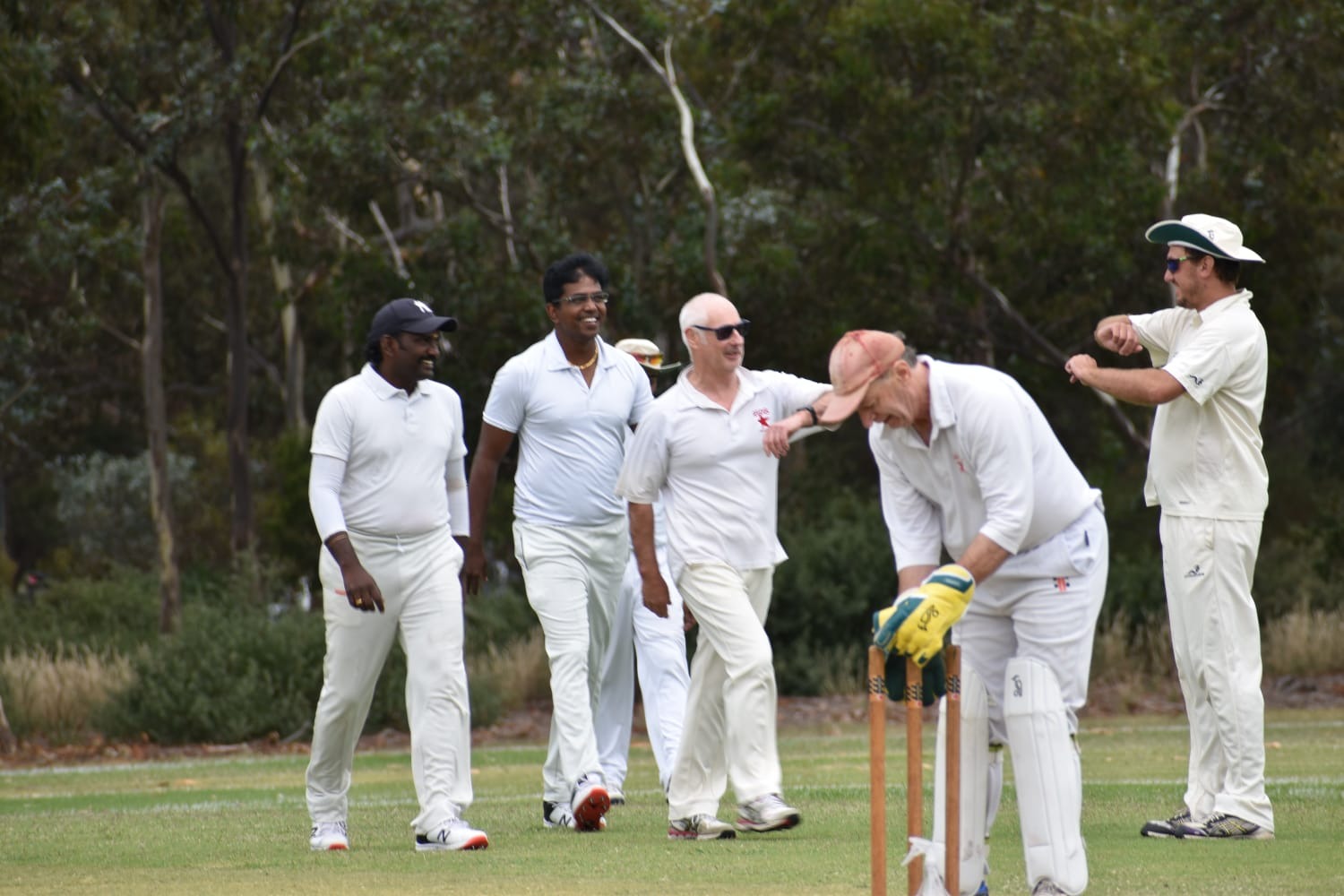
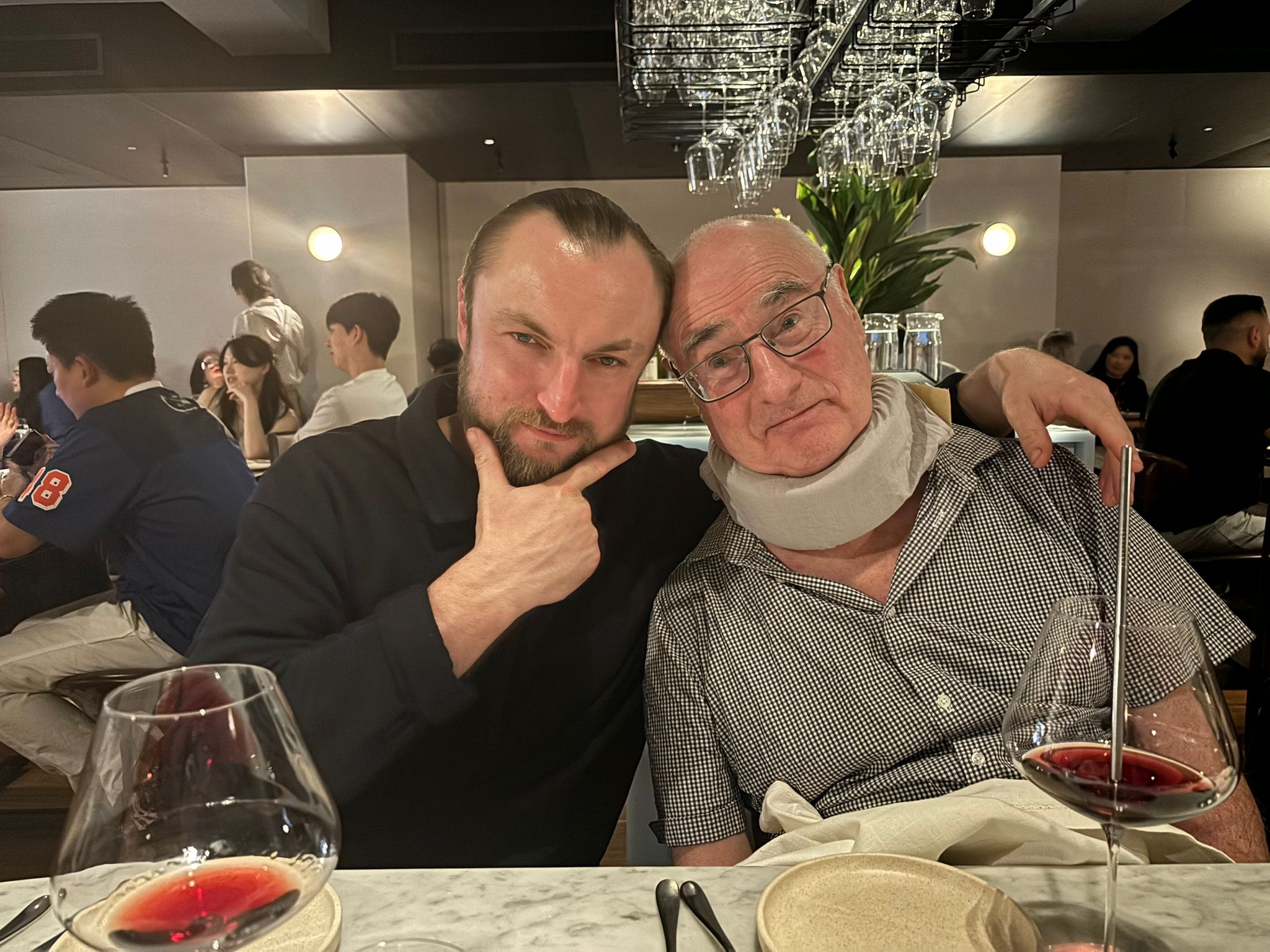
My ability to physically do things went down relatively quickly. Throughout the progression I’ve pivoted, been flexible, and kept doing things for as long as I could, then moving on to new ways of doing things when I’ve had to.
The Power of Music
Music has always been a key part of my life and, with so much incrementally taken away, it remains one of the few skills and joys that I can readily exercise and, in this very exploration, still dare and grow.
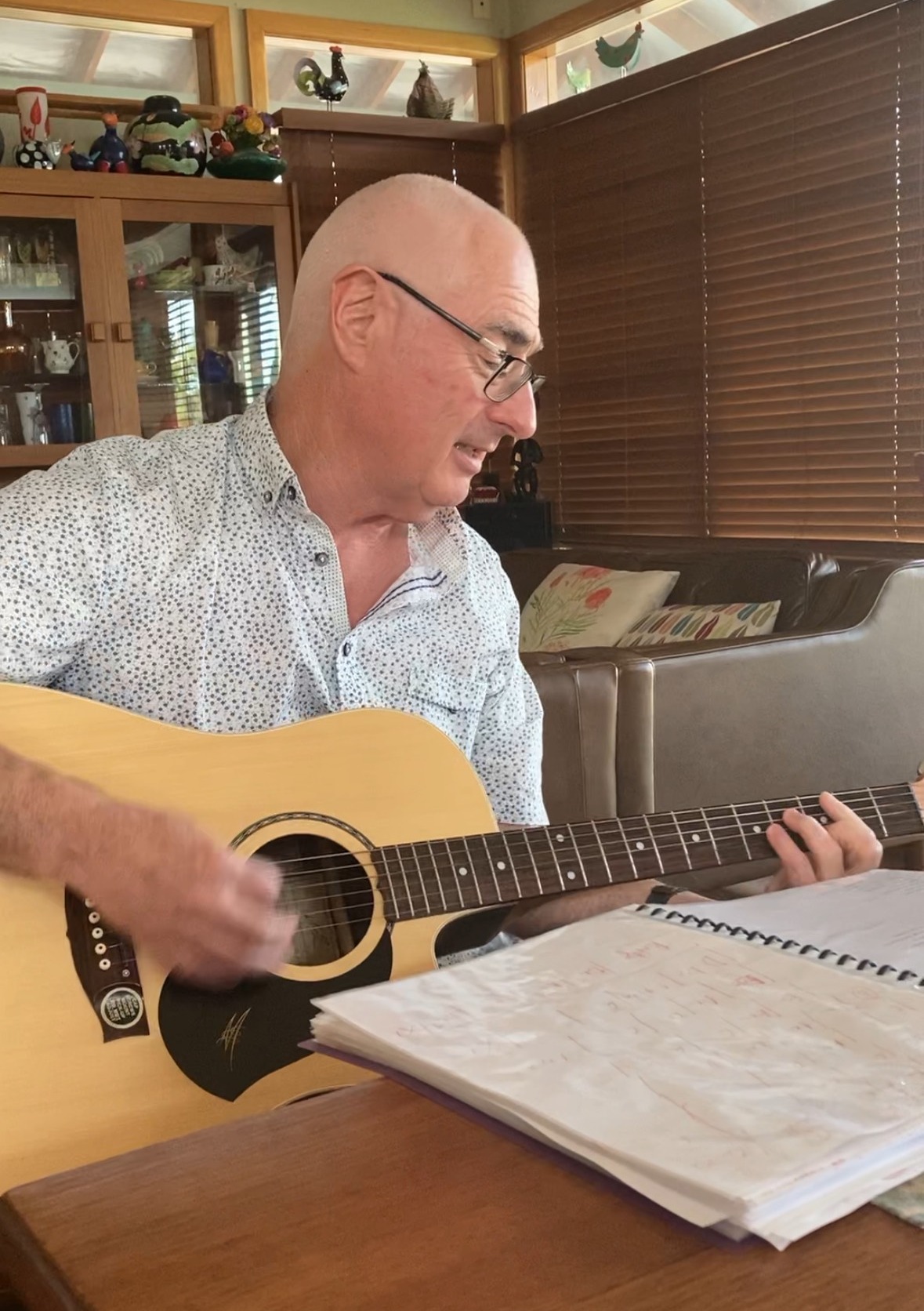
I have always been a part-time musician — an on-again, off-again guitarist whose enthusiasm waxed and waned. My progress was often limited by what felt like a personal glass ceiling, where natural limitations curtailed my musical ambitions.
Adding to this challenge, two broken fingers from a cricket injury meant my return to playing, brought about from wanting to do something away from the television during Covid lockdowns, was initially restricted to simple open chords.
At this stage I lacked both the discipline and self-belief to learn established songs. Instead, I preferred to pick the low hanging fruit, that is, to trot out the most common chord patterns. However, from these sessions, I soon began developing my own chord progressions and then lyrics emerged.
By the end of 2021, I had written more than 20 completed songs, along with a range of unfinished musical pieces and lyrics.
Given my age, my favourite performers and my musical influences are many. As a child and teenager of the 60’s, I grew up on a steady diet of British Pop, Rhythm n’ Blues and American imports made up of, amongst others, The Beatles, The Rolling Stones, Led Zeppelin, The Cream, The Beach Boys, The Doors, Elvis Presley and Creedance Clearwater Revival. The pioneers of Aussie Rock, such as The Easybeats, Doug Parkinson In Focus, The Bee Gees, and Billy Thorpe and the Aztecs, completed my musical foundations.
From there, I continued enjoying the cream of Australian and international rock bands, and gaining influence from the grunge scene and more psychedelic sounds.
In terms of lyrics, I have been influenced most by several great practitioners: Bob Dylan, Leonard Cohen and Mark Knopfler.
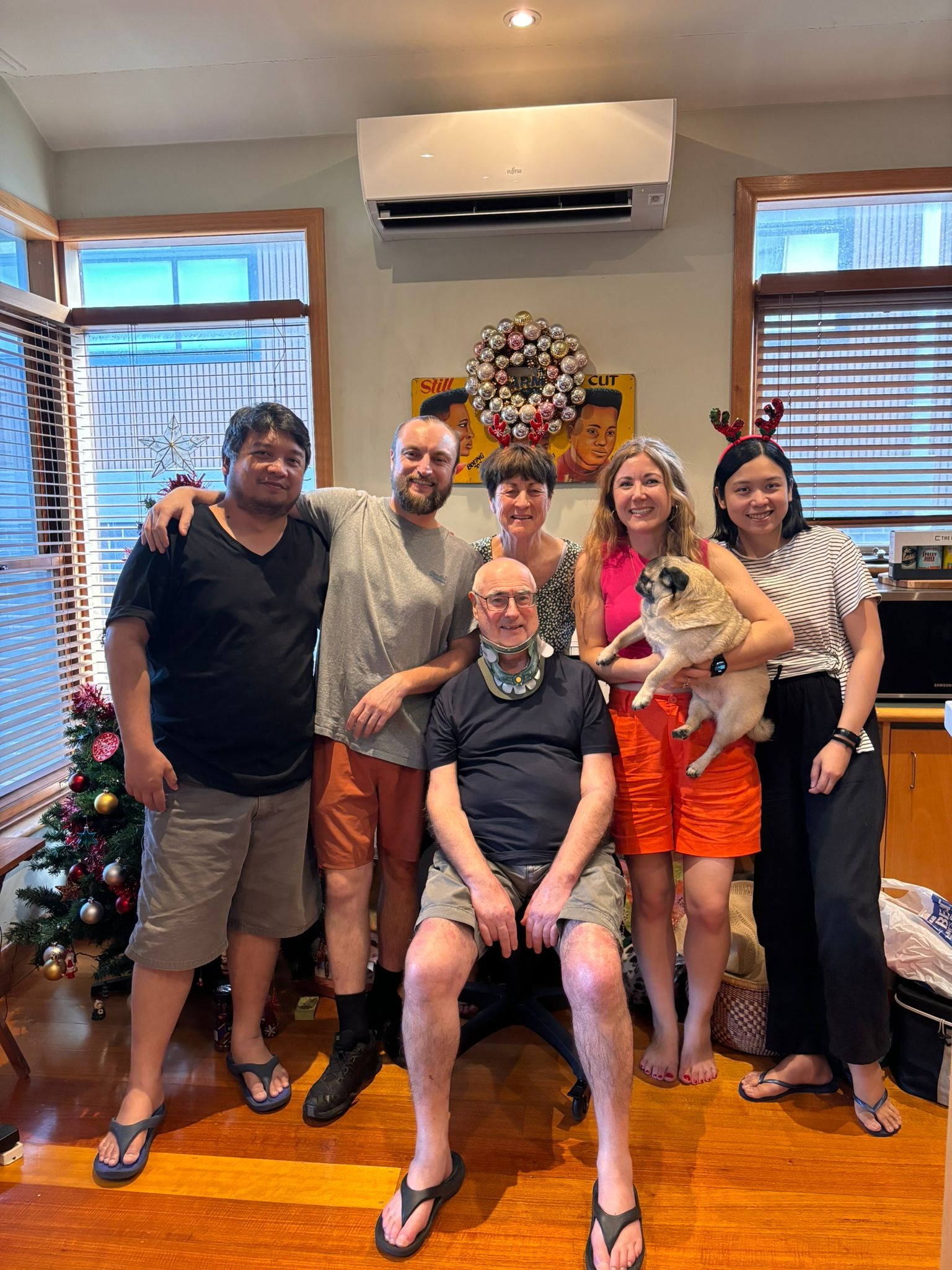
Soon after my MND diagnosis, I lost the ability to play — or even safely hold — a guitar. However, with the unwavering support of my partner, family, and close friends, I have been encouraged to bring these songs to life, in the form of a digital recording.
The Making of the 'An Intimate Stranger' Album
Ironically, without my illness, these songs would most likely have remained unrecorded. At best, I am a rhythm guitarist of modest ability who would never have convinced a band to play his songs.
The initiative to create the album came from two main fronts. Firstly, I was motivated to leave something of myself for my partner, my son, my immediate family and friends. Secondly, one of my close friends, Glenn, who had played in a range of bands over four decades, encouraged me to produce some enduring record of this creativity.
Of the 17 songs included in the album and the bonus EP, 15 were composed during the Covid lockdowns of 2020-2021.
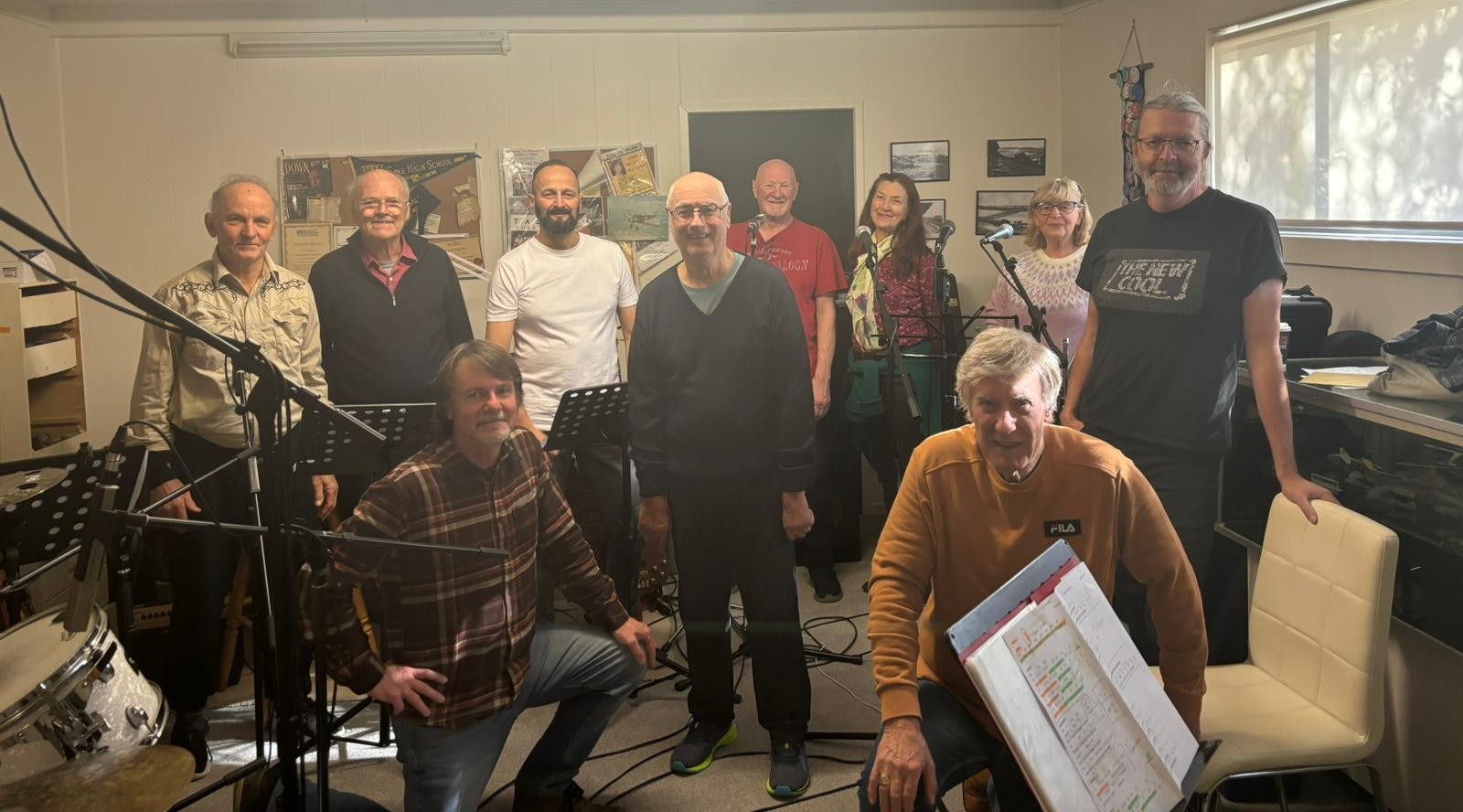
Due to the loss of function in my arms, I began recreating my original strum patterns using digital instruments and computer-based music programs, to capture the nuances of my original playing style. Via this creative process, I expanded my musical skills. Using digital instruments, I then created additional guitar voicings, added bass and drum tracks as well as melody guides for vocalists.
From October 2024 to December 2025, when I was unable to use my hands, I was lucky enough to utilize the fingers of others.
Working several times a week for four to five hours at a time on this project was pivotal to my well-being. It gave me a sense of focus and of meaning. Being a composer, a musician and a music producer became my job, my nine-to-five like any other Working Joe.
The inspirations for these songs are various. Some songs explore global issues such as climate change, war (‘Fighting For’), the chasm between first world and third world countries (‘First World Problems’), or the world we are leaving for our grandchildren (‘It’s Not Too Late’). Other songs delve into more traditional themes – love (‘Lost’, ‘Take Me’), relationships (‘Fight Night’), depression (‘What Do You Do’), daily living (‘The Daily Grind’) and nostalgia (‘Remember Back When’).
Often the inspiration was a particular hook, be it a riff or a vocal statement that resonates. For example, ‘Procrastination’ is a practice that too many of us follow. The lyrics in themselves use many words to say very little, and rely on some well-known, cliché sayings such as “a deer in the headlights”, “a fish out of water”, “you have no insights”, “a lamb to the slaughter”. The blues song ‘When The Shit Hits The Fan’ is about what can go wrong. This is a common Australian phrase which I thought was a rich vein of our cultural experience to explore.
All of these songs are like children that have certain unique traits or features. I also have a subjective attachment to them, individually and collectively.
Having said that, ‘The Man’ is my favourite track because it tells a well-known story of forbidden love, the violence that ensues, the surprise betrayal and ultimate consequences. The frenetic and lively delivery of the music also conveys the blind passion and the daring. The lyrics as well as the twangy guitar are suggestive of the American West.
The Fundraiser
Throughout my journey with MND, I have been supported in countless ways by MND Victoria. From the start of the project, I had the want to be able to use it to give back.
Rather than organising a one-off fundraising event, I have chosen to create a tangible product — an album of Australian pub-rock songs.
This project has been completed both as a legacy for my partner, family, and friends, and as a meaningful contribution to MND fundraising. In doing so, it has allowed me to transform limitation into creativity, and personal challenge into purpose.
The primary goal of this album is fundraising. However, as a creative work, I hope it achieves more than that.
Through the exploration of significant world issues alongside everyday human concerns, I aim to connect with family, friends, and the wider community who support those living with MND.
I hope the lyrics, music and the voices I have selected to convey my narrative, resonate with the MND community and with the wider public audience. Clearly the issues and concerns discussed above, along with health, affect us all.
I have been heartily impressed by the positive community response. People are always, for the most part, kind and generous. I hope that there is sufficient variation in the lyrics and music, as well as feelings and considered reflection, to cater for most people. I hope people enjoy these recordings. I have worked diligently with others to do my best.
Share page